Dealing with Narrow Victorian Staircases in Old Malden
Posted on 02/06/2026
Dealing with Narrow Victorian Staircases in Old Malden: Practical Moving Advice for Tight Spaces
Victorian homes have a certain charm, don't they? Tall ceilings, period details, solid walls, and staircases that sometimes feel as though they were designed for a different species entirely. If you're dealing with narrow Victorian staircases in Old Malden, you already know the problem: moving furniture, appliances, or even a boxed mattress can turn into a careful, slightly nerve-racking puzzle. The good news is that with the right prep, the right lifting approach, and a bit of local know-how, this sort of move becomes manageable rather than miserable.
In this guide, we'll walk through the practical realities of tight stair turns, split-level landings, awkward banisters, and the things people forget until the sofa is halfway up the stairs. You'll find step-by-step advice, common mistakes, a useful comparison table, and a realistic checklist you can use before move day. If you're planning a flat move or a family house move, it also helps to read around the wider moving process in this stress-free house moving guide and the broader services overview when you want to understand your options.
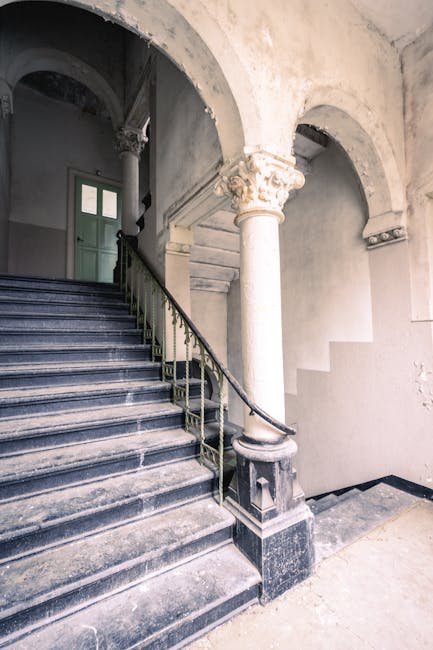
![A view from the top of a narrow Victorian staircase inside a property, showing red patterned carpeted steps with a decorative, dark metal banister featuring intricate scrollwork. The staircase curves downward, with a wooden handrail at the top. The area is lit with soft, natural light, highlighting the textured carpet and the detailed ironwork of the balustrade. This image depicts the challenging environment faced during home relocation or furniture transport in Old Malden, with [COMPANY_NAME] providing professional moving services that include navigating tight staircases and ensuring safe packing and loading processes for residents and their belongings.](/pub/blogphoto/dealing-with-narrow-victorian-staircases-in-old-malden1.jpg)
Why Dealing with Narrow Victorian Staircases in Old Malden Matters
Narrow Victorian staircases are not just a nuisance; they shape the whole moving plan. In Old Malden, many older properties have stairwells with tight corners, shallow landings, and railings that eat into usable width. One bulky item can block the route, and suddenly a simple move becomes a series of awkward angles, stopped conversations, and careful reconsideration.
Why does it matter so much? Because damage in these homes tends to happen in three places: the item itself, the walls and banisters, and the people carrying it. A chip on a skirting board is annoying. A strained shoulder is worse. And a wardrobe jammed at the half-landing? That can halt the whole day. To be fair, this is where a calm approach saves more time than brute force ever will.
Old Malden's older housing stock also means you may be working with shared hallways, close neighbours, or limited street access. If the staircase is the bottleneck, everything else has to be planned around it. That includes parking, carrying routes, item order, and even whether some belongings are better dismantled, wrapped differently, or stored temporarily. For moves that involve a delay between moving out and moving in, it can also help to look at storage in Old Malden and the practical advice in this sofa storage guide.
Expert summary: the narrow staircase is usually not the real problem on its own. The real problem is failing to treat it as a design constraint. Once you plan around the staircase, the move becomes much more predictable, and much less stressful.
How Dealing with Narrow Victorian Staircases in Old Malden Works
Handling a tight staircase well is mostly about matching the item to the route, not forcing the route to fit the item. In plain English: measure first, lift second. The process usually starts with a route assessment. That means checking stair width, landing depth, ceiling height, bannister clearance, and turn angles at the bottom and top of the stairs.
Once you know the limits, you can decide whether an item should go up intact, be dismantled, be protected and manoeuvred carefully, or be moved by an alternate route. A standard sofa may need its feet removed. A bed frame may need stripping to components. A fridge may simply be too tall once wrapped, even if it looks fine at first glance. It sounds obvious until you're standing there with a tape measure and a growing sense of disbelief.
Good moving teams also use a staging method. Instead of carrying several things at once, they prepare each item in sequence, protect edges, and use controlled body positioning. That's where well-timed lifting technique matters. If you want a deeper look at how trained movers keep loads stable and bodies safer, the article on kinetic lifting is worth a read. If you're trying to move a heavy piece on your own, the advice in solo heavy lifting explains why that is rarely a clever idea on stairs.
The actual movement through the staircase usually follows a few principles:
- Keep the load as close to the body as practical.
- Use two-person communication when the item is large or awkward.
- Turn items on their edge only when the item and finish can safely handle it.
- Protect handrails, walls, corners, and door frames before any lifting starts.
- Stop and reset if the angle feels wrong rather than "just giving it a go."
That last one matters more than people think. The few seconds spent resetting a move can save a long, expensive repair later.
Key Benefits and Practical Advantages
There are real benefits to doing this properly, and they go beyond avoiding a cracked wall. The first is obvious: fewer accidents. But the second is efficiency. A staircase that looks impossible can often be handled smoothly once the right sequence is used.
Here are the main advantages of a planned approach:
- Less damage: to your furniture, walls, paintwork, and flooring.
- Less physical strain: especially on shoulders, backs, and knees.
- Faster move times: because you stop hesitating mid-carry.
- Better decision-making: items are broken down before they become a problem.
- Less stress: and let's face it, moving day already gives you enough of that.
There's also a financial side. Protecting furniture and avoiding accidental damage usually costs less than repairing a staircase wall or replacing a scraped wardrobe. Even if you are only moving a few items, the same logic applies. A small flat move on a period staircase can be more demanding than a larger move in a modern building with generous access.
For people moving between flats, or where stairs are the main obstacle, it is often useful to compare different moving support options. You might find that flat removals in Old Malden or furniture removals in Old Malden make more sense than trying to piece everything together yourself. And if your timing is tight, same-day removals can sometimes help when access windows are limited.
Who This Is For and When It Makes Sense
This topic matters to more people than you might expect. It is not only for homeowners with a grand old terrace. Narrow Victorian staircases show up in rental flats, converted homes, maisonettes, and older houses across Old Malden. If your property has one of those "nice-looking but slightly impractical" staircases, this guide is for you.
It especially makes sense if you are:
- Moving a sofa, wardrobe, bed frame, or dining table up or down stairs.
- Relocating from a Victorian or older conversion property.
- Trying to move without damaging decor in a freshly painted home.
- Managing a student flat move with shared access and limited stair width.
- Working to a tight schedule and can't afford trial-and-error on the day.
If you're a student, the practical constraints are often about budget and speed rather than large furniture, which is why student removals in Old Malden can be a sensible fit. For households, the challenge is usually bigger items and family logistics. For businesses, the issue may be furniture, files, and equipment carried through a tight internal stairwell. In those cases, office removals in Old Malden deserve a careful look.
And if you are reading this because a particular item simply will not fit, that is not failure. That is useful information. It tells you to change the plan before move day turns messy.
Step-by-Step Guidance
Here's a practical way to handle narrow staircases without losing your nerve halfway through.
1. Measure the staircase and the item
Take width, height, turning space, and the item's longest dimensions. Don't guess. Measure the awkward bit twice if needed. The thing most people miss is clearance at the turn, not the straight run. A wardrobe may fit on the stairs themselves but fail at the landing.
2. Decide whether the item should be dismantled
Flat-pack items, bed frames, table legs, and some sofas can often be broken down. If you need help with this kind of preparation, the article on packing for a big move is useful, and so is pre-move decluttering if you want to reduce what needs to go upstairs in the first place.
3. Protect the staircase before lifting anything
Use floor coverings, corner protection, and padding around the railings and walls where possible. Victorian staircases often have narrow paintwork edges and curved details that mark very easily. A small scuff can become a long touch-up job later.
4. Choose the route and the order of items
Not everything should be carried in the same order as it was loaded. Sometimes the biggest or least flexible item should go first. Sometimes the opposite is true because you need the route clear for smaller items. There is no fixed rule here; it depends on the staircase and the item geometry. Slightly unglamorous, but true.
5. Use proper lifting positions
Keep knees soft, hands secure, and communicate clearly. For two-person carries, one person should lead the count and the turn. If a load starts drifting, stop. Don't try to correct it while moving on a step. That is how backs complain. Loudly.
6. Pause at each awkward point
Half-landings, low ceilings, and door swings are where mistakes happen. Reset the grip if the balance shifts. On tighter staircases, a pause is not a delay; it is part of control.
7. Know when to stop and change the plan
If an item is genuinely too large, forcing it is rarely the answer. You may need to angle it differently, dismantle it further, use a different crew size, or choose storage until the route is clearer. For items that are particularly awkward or valuable, such as a piano, specialist support matters. The page on professional piano moving explains why.
Expert Tips for Better Results
There are a few small habits that make a surprisingly big difference on period staircases. None of them are flashy, but they work.
- Remove friction points early. Take off table legs, mirrors, lamp shades, and anything that catches.
- Use blankets strategically. Wrap hard corners and rail-touch points, not just the main body of the item.
- Check for hidden hazards. Loose runners, dusty steps, or wet shoes can create a surprisingly slippery carry.
- Keep communication short and simple. "Up," "hold," "turn," and "stop" are better than a long sentence shouted on a stairwell.
- Do the fiddly stuff before the item is on the stairs. Once a sofa is part-way up, you really do not want to be searching for the missing foot bag.
A practical example: a two-seater sofa may technically fit through a staircase if you remove feet, angle the backrest, and protect the wall edge. But if the hallway is cramped at the bottom, you may spend more time staging the move than actually moving. That is why experience matters. Not because movers are magic, just because they have seen the pattern before.
If the move involves extra preparation, it helps to align the wider move too. cleaning before moving out and moving a bed and mattress safely are both relevant if your staircase is only one part of the day's puzzle.
Common Mistakes to Avoid
Most staircase problems are preventable. The tricky part is that people tend to discover the mistake at the exact moment they wish they had not.
- Skipping measurements. "It should fit" is not a measurement.
- Leaving the wrapping until too late. Padding should be ready before the item enters the stairwell.
- Forgetting the landing turn. Straight-line thinking does not work well on a Victorian staircase.
- Trying to muscle through an awkward angle. Strength is useful, but leverage wins.
- Moving too many items at once. That just creates clutter and confusion on the stairs.
- Ignoring neighbour or access issues. If you need the hallway clear, plan for it properly.
Another big one is underestimating tiredness. Stair-carrying is exhausting in a way that surprises people. A piece that feels manageable at the front door can feel completely different halfway up the stairwell after several trips. Truth be told, that is where more wobble and more damage tend to happen.
Tools, Resources and Recommendations
You do not need a van full of specialist kit to move through narrow staircases, but a few sensible tools make life easier. In a practical sense, the essentials are about protection, control, and reducing awkward handling.
- Furniture blankets and wrap: for edges, corners, and polished surfaces.
- Straps: useful for stabilising heavy items during carry and lift positioning.
- Gloves with grip: helpful for holding smooth or bulky items.
- Tape and bags: for screws, feet, and dismantled fittings.
- Floor protection: especially on painted steps or fragile flooring.
- Clear labels: so dismantled parts do not vanish into the moving chaos.
If you are organising a full move, the following pages may help you connect the dots: packing and boxes in Old Malden for supplies and packing support, removals in Old Malden for the broader move, and man and van services if you need a flexible transport option. For many readers, man with a van in Old Malden is the middle ground between doing everything solo and booking a larger service.
Quick practical note: if you are moving something highly valuable, irreplaceable, or very heavy, do not improvise. The safest tool is often a trained pair of hands.
Law, Compliance, Standards, or Best Practice
When moving in homes with tight internal stairs, the key compliance issue is usually safety rather than formal licensing. In the UK, moving teams and householders are expected to take reasonable care to avoid injury and damage. That sounds broad because, in practice, it is. The basic standard is simple: if a method looks unsafe, it probably is.
For anyone hiring help, it is sensible to expect clear insurance cover, sensible handling procedures, and a straightforward complaints route if something goes wrong. Those are not just nice extras. They are signs of a professional set-up. You can review relevant business policies such as insurance and safety, health and safety policy, and complaints procedure if you want to understand how a provider approaches risk and issue resolution.
There is also a practical accessibility angle. Period staircases can be difficult for anyone with mobility issues, and not every route is suitable for every person. Where that is a concern, accessibility information should be part of your planning, not an afterthought. And if storage becomes part of the solution, it is wise to use a provider with clear terms, security, and transparent handling information, which is where pages like terms and conditions and payment and security become useful.
Best practice, in short: assess, protect, communicate, and do not force a carry that is clearly beyond the route.
Options, Methods, or Comparison Table
There is more than one way to deal with a narrow Victorian staircase. The right choice depends on the item, the time available, and how much risk you are willing to carry. Here is a simple comparison.
| Method | Best For | Pros | Limitations |
|---|---|---|---|
| Carry intact | Smaller furniture and lighter items | Fast, simple, fewer loose parts | Risky if the item is bulky or the turn is tight |
| Dismantle first | Beds, tables, some wardrobes, flat-pack items | Improves fit and reduces damage risk | Requires tools, time, and careful reassembly |
| Two-person controlled carry | Medium-heavy items with awkward angles | Better balance and communication | Needs coordination and clear space |
| Temporary storage | Large or non-urgent items | Removes pressure from move day | Not ideal if you need the item immediately |
| Professional removal support | High-value, heavy, or fragile items | Safer and usually more efficient | Costs more than doing it yourself |
For many Old Malden moves, the best answer is a mix of methods. Maybe the sofa is dismantled and carried with protection. Maybe the wardrobe is stored temporarily. Maybe the whole move works better with a removal services approach instead of a patchwork of favours and rented equipment. There is no shame in choosing the route that reduces risk.
Case Study or Real-World Example
A common example in Old Malden is a top-floor flat in a Victorian conversion. The hallway is narrow, the staircase turns sharply at the half-landing, and the banister leaves little extra space. The occupant has a sofa, a bed frame, a chest of drawers, and a freezer. On paper, none of these are extraordinary. On the stairs, they become very different stories.
In a case like this, the move works best when the largest items are assessed before moving day. The bed frame is dismantled and bagged by section. The chest of drawers is emptied fully, protected, and carried with two people. The freezer is checked early because its height and grip points matter more than people expect; that kind of planning is often easier when you've already thought through freezer storage and handling. The sofa may be moved upright with padding on the corners, or stored temporarily if the staircase turn is just too tight.
The important part is not that everything goes perfectly. It rarely does. The important part is that the team does not discover problems mid-carry. In real life, the best result is usually a calm one, with a bit of repositioning, one or two pauses, and no scrapes. Not glamorous, but a good move seldom is.
Practical Checklist
Use this checklist before moving anything up or down a narrow Victorian staircase.
- Measure the staircase width, landing, and low points.
- Measure each large item in its carried shape, not just on paper.
- Decide what can be dismantled safely.
- Remove loose parts, shelves, feet, and handles where needed.
- Wrap vulnerable edges and corners.
- Protect walls, banisters, and flooring.
- Plan the order in which items will move.
- Keep pathways clear from front door to staircase.
- Use clear verbal signals during each carry.
- Stop if the item jams or the angle feels unsafe.
- Have a fallback plan for storage or alternate handling.
- Check that boxes are not too heavy for stair carrying.
- Confirm parking, access, and arrival timing in advance.
If you want a broader moving reminder alongside this, the Malden Road moving checklist is a handy companion piece, and for shop or business relocations, the Old Malden High Street business move guide may be more relevant.
Conclusion
Dealing with narrow Victorian staircases in Old Malden is less about brute strength and more about planning, patience, and the right sequence. Once you understand the staircase as the main constraint, everything else becomes easier to organise. You'll know what to dismantle, what to protect, what to store, and what really needs professional help.
That shift in thinking matters. It saves time, reduces stress, and helps protect the home you are leaving behind, which is often just as important as getting things safely into the new one. And yes, a staircase can still be annoying. But it does not have to ruin the day.
Get a free quote today and see how much you can save.
For more local moving help, you may also want to look at about us, recycling and sustainability, and removal companies in Old Malden if you are still comparing the best fit for your move. Sometimes the smartest move is the one that feels calm from the first box to the last landing.
![A view from the top of a narrow Victorian staircase inside a property, showing red patterned carpeted steps with a decorative, dark metal banister featuring intricate scrollwork. The staircase curves downward, with a wooden handrail at the top. The area is lit with soft, natural light, highlighting the textured carpet and the detailed ironwork of the balustrade. This image depicts the challenging environment faced during home relocation or furniture transport in Old Malden, with [COMPANY_NAME] providing professional moving services that include navigating tight staircases and ensuring safe packing and loading processes for residents and their belongings.](/pub/blogphoto/dealing-with-narrow-victorian-staircases-in-old-malden3.jpg)